


Everyone knows the Let L-410 Turbolet — one of the most widespread small turboprops in the post-Soviet region, but also, statistically speaking, one of the least safe aircraft in its category. Yet almost no one has heard of its far more ambitious relative, the Let L-610, a project intended to become a modern and serious competitor to Western regional aircraft such as the ATR 42 and Dash 8, but which ultimately became one of the most notorious missteps of the Czech aviation industry.
The story of the L-610 begins in the late 1970s, when Aeroflot — then the largest airline system in the world — started searching for a replacement for the ageing Antonov An-24. Let Kunovice, strengthened by the success of the L-410, was tasked with developing a twin-engine turboprop for around 40 passengers, complete with a pressurised cabin, more advanced avionics, improved performance and range sufficient to cover vast Soviet distances. It was the first attempt by an Eastern Bloc manufacturer to seriously enter a segment that would later be dominated by the ATR 42 and Dash 8 family.
In the early project phase, a four-engine variant was also considered — a compromise using the older but proven Walter M601 engines, as the development of an entirely new M602 engine was expected to be long and uncertain. After years of deliberation, the four-engine option was dropped in 1985, and the programme continued as a classic twin turboprop. Entirely new systems were designed for the M602, including five-blade slow-turning V518 propellers, a SAFÍR auxiliary power unit and more than 200 instruments and components created specifically for the L-610.
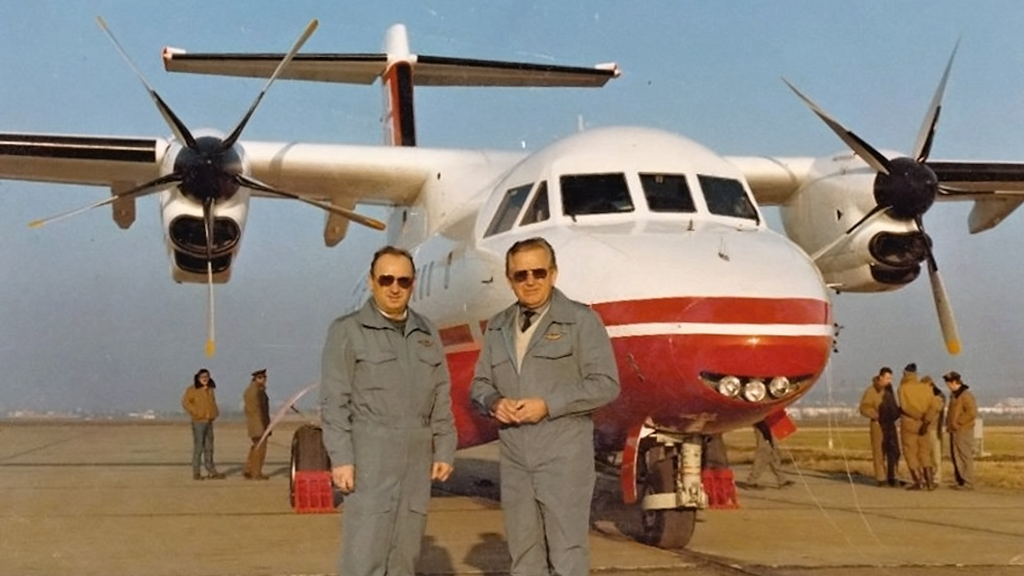
Exhaustive system testing was conducted in parallel on various platforms: navigation systems on the L-410 UVP-E, electrical systems on a modified Avia Av-14, and the full powerplant on an Il-18LL flying testbed. It was one of the most extensive test programmes ever carried out for a civil aircraft in Czechoslovakia.
The L-610 performed its maiden flight on 28 December 1988, documented in the short film Six Degrees of Freedom. By mid-1990, three more prototypes had been completed, along with two airframes for static and fatigue testing. Around the same time, talks began with General Electric about using their CT7 engines, which led to the development of the L-610G — a Western-market variant fitted with CT7-9D engines and four-blade Hamilton Standard propellers.
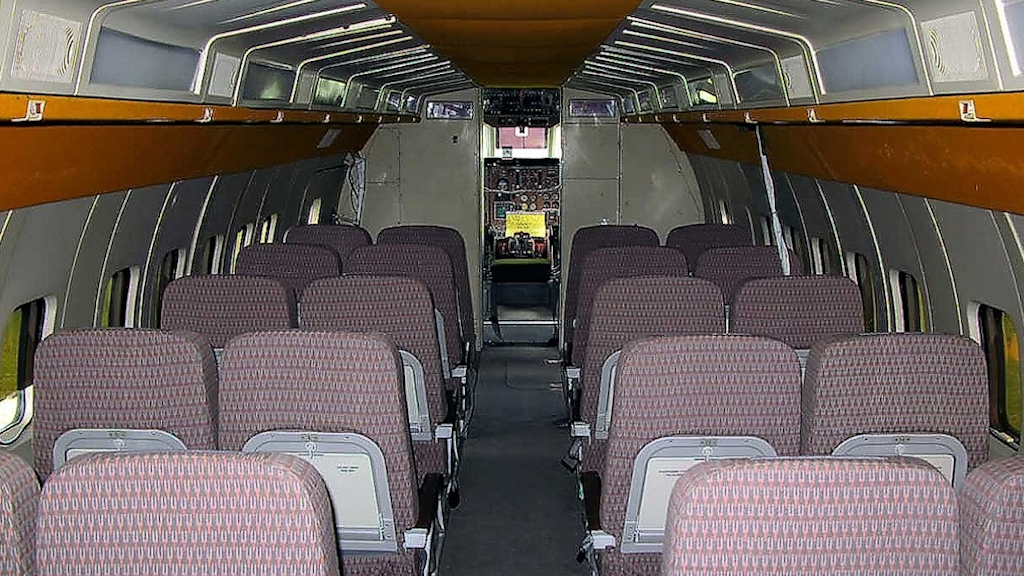
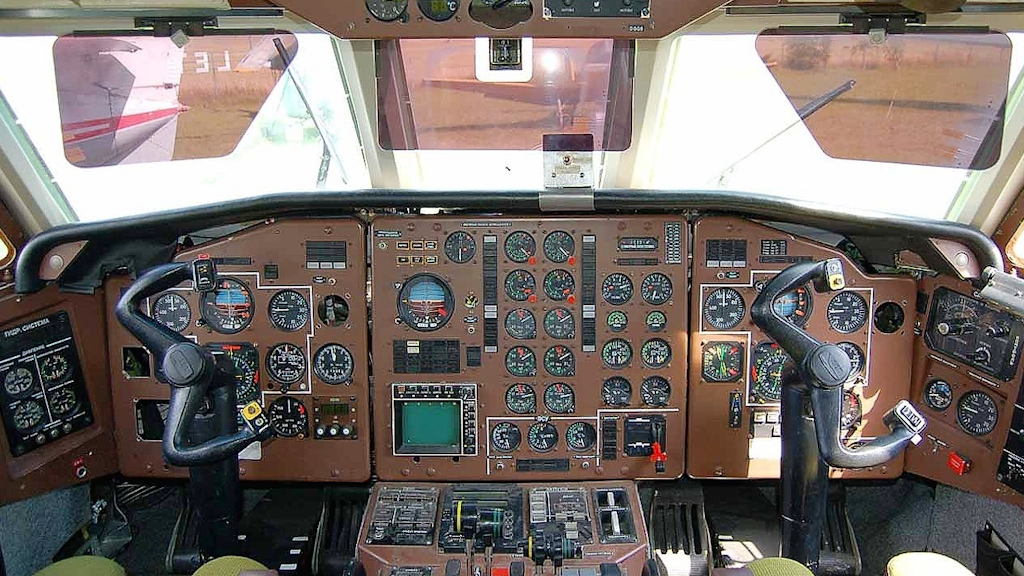
Aircraft fitted with domestic M602 engines were designated L-610M. One prototype (XL-610M X05) was even tested by the Czech Air Force, though it was never officially adopted. Certification was planned for 1994, with deliveries to begin in early 1995, while L-610G certification was expected in 1997. The second L-610G, fully compliant with FAR-25 standards, flew in 1997 — and became the last L-610 ever to take to the skies.
By then, the programme was already losing ground. The collapse of the Eastern Bloc and Aeroflot’s breakup destroyed the original business case. Let was then acquired by the American Ayres Corporation, which rebranded the L-610G as the Ayres 7000. But the project never secured the funding needed to continue development. One of the U.S. prototypes sat deteriorating for years at Southwest Georgia Regional Airport, until Ayres finally went bankrupt in 2001.
In 2006, the new owner brought the story to an end: all tooling, jigs and unfinished parts were written off and physically destroyed. The planned maritime patrol version, the L-610MPA, remained only on paper. In total, only eight airframes were ever built — six flying prototypes and two for static testing.
Still, several examples were preserved. One complete aircraft and two additional fuselages with wings are stored at the Kunovice Aviation Museum, where a detailed restoration has been underway since 2018, with the goal of displaying a fully restored aircraft. Another complete example (OK-024) is exhibited at the Aviation Museum in Olomouc. The L-610 also holds two important “firsts”: it was the largest Czechoslovak regional aircraft ever designed, and the first domestic development programme to include a pressurised cabin and integral fuel tanks.
In Russian industry circles, the idea of reviving the L-610 resurfaced in 2017, and in 2019 it was officially confirmed by Russian Industry Minister Denis Manturov. The plan was clear: production in Yekaterinburg (UZGA), where the L-410 NG was assembled, and deliveries of the first L-610s starting in 2023. Yakutia Polar Airways even announced an order for ten aircraft.
The reason was straightforward — with the loss of Ukrainian Antonov aircraft, Russia wanted a “domestic” replacement for the An-24 and An-26. The revived L-610 was to feature a higher MTOW, increased capacity, a new fuselage, modern avionics and improved performance. But after Russia’s invasion of Ukraine in 2022, UZGA’s owner lost access to Czech production facilities and the original manufacturer. Aircraft Industries a.s. has since been taken over by the Czech company Omnipol, which has not commented on continuing the project — while all technical documentation remains in Russia.
After the shutdown of the L-610 and its financial collapse, Let Kunovice survived only by returning to small-scale L-410 production. The arrival of Russia’s UGMK brought stability, factory modernisation and the development of the L-410 NG. There was even a short-lived plan to transfer all production to Russia, but it failed.
Today, Let Aircraft Industries is far more modest than during the L-610 era, but stable — focused on niche production of short-haul turboprops, supporting the existing fleet, and carrying out occasional upgrades.
The L-610 remains an industrial lesson: even technically promising projects can collapse when they run out of time, market relevance and political backing. It was the largest and most ambitious aircraft ever developed in Czechoslovakia — and also one of the clearest examples of how geopolitical realities can destroy something that looked like a sure success on paper.


