


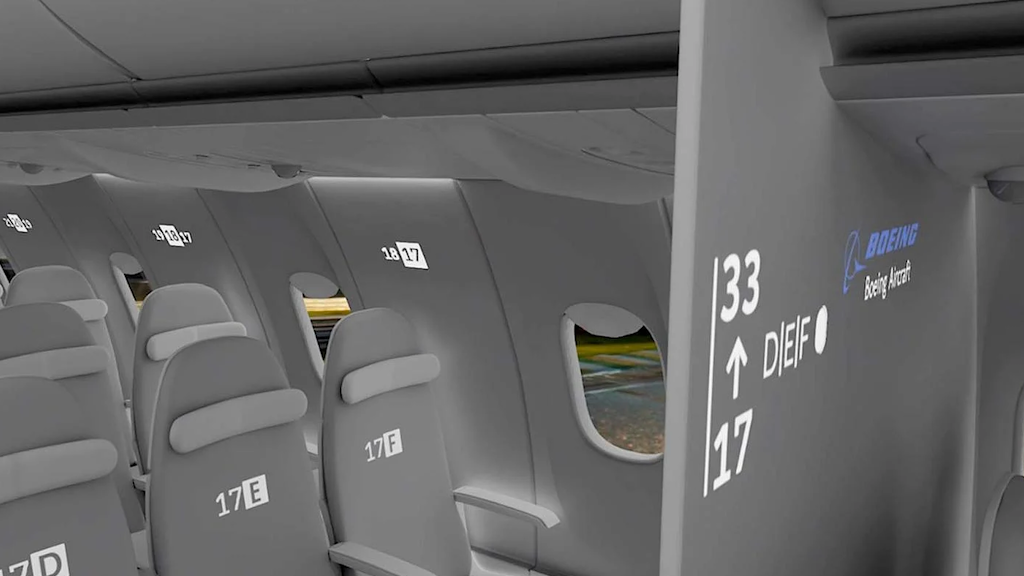
Boeing, in cooperation with Shanghai’s Tongji University, is developing an innovative in-flight entertainment and information system that could reshape the future cabin experience. Instead of traditional seatback screens, the new technology relies on compact projectors that transform cabin surfaces into interactive displays. The system uses gesture recognition, allowing passengers to control content with simple hand movements.
According to Boeing, the concept is still under development and not yet ready for market introduction, but in the future, it could reduce aircraft weight and power consumption by up to 50 percent compared to current systems. “This promising application of projection technology in the cabin addresses a frequent request from our airline customers — to provide a premium digital experience while reducing fuel burn, saving space and simplifying maintenance. All of this fits into our vision of transforming the passenger experience inside the cabin,” said Joe Keegan, Boeing’s director of Product Development.
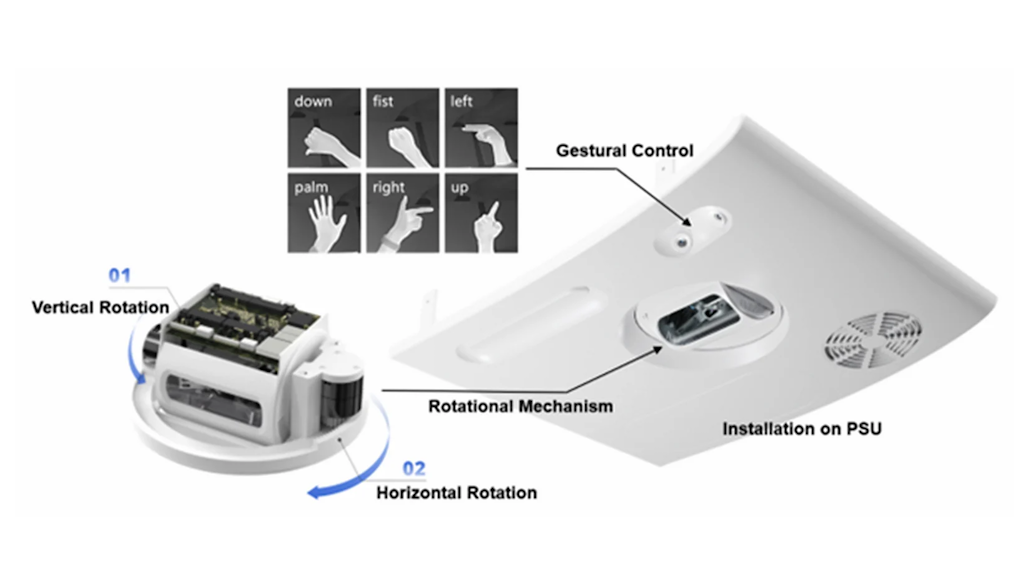
The projectors would be integrated into the passenger service units above the seats, with each capable of serving up to four passengers. Images would be projected onto seat surfaces or cabin partitions, while infrared sensors would track hand movements and enable intuitive control of the content.
Development of this technology began three years ago, with Boeing’s innovation specialists working alongside the commercial aircraft development teams to shape the vision and technical requirements. “Boeing’s industry expertise helped us overcome numerous design challenges and refine the concept,” said Jiao Mo, associate professor and research partner at Tongji University.
Peter Li, managing director of Boeing Technology Innovation China, emphasized that the project not only reflects the long-standing cooperation between Boeing and Tongji but also demonstrates a commitment to developing talent and new technologies in the region.
The next step is to continue testing and refining the system, to increase its technical readiness and evaluate commercial feasibility. If successful, passengers in the future could experience flights without traditional screens, while airlines would benefit from significant savings in fuel, weight, and maintenance.


