

The Croatian Air Force is currently undergoing the most important modernization cycle since the creation of the Croatian state. After decades in which its fighter component survived on the extended service life of the MiG-21, Croatia has made a technological leap with the operational introduction of the Rafale, a step rarely seen among small air forces. With the arrival of the last of 12 Rafales on April 25, 2025, the delivery of the complete squadron was formally concluded, giving the Croatian Air Force a capability that is no longer merely a symbol of sovereignty, but a real operational advance in the monitoring and defence of national airspace. The very fact that Croatia has moved from an extremely limited Soviet-era platform to a 4.5-generation multirole fighter changes the way national defence is viewed, but also the responsibility of the state toward the long-term sustainment of those capabilities. In May 2025, the Croatian Ministry of Defence stated that the presentation of the complete squadron of 12 Rafales marked a huge technological leap for the Croatian Air Force and the Croatian Armed Forces.
That change is not merely a matter of a new fighter aircraft. The Rafale brings a different culture of planning, training, maintenance, armament, command and networked operations. At the same time, it is a system that cannot exist on its own. For a fighter squadron to be truly effective, an entire structure must be built around it, from pilots and technicians to simulators and ground support, air defence, helicopters, unmanned systems, aviation logistics and the training system. That is why, after the most visible part of the modernization process, a more complex question now arises: how should the Croatian Air Force be developed over the next 10 to 20 years while remaining realistic?
From preserving capability to serious modernization
Only a few years ago, Croatia was on the verge of losing its fighter aviation capability. Today, that capability has not only been preserved, but qualitatively raised to a level Croatia has never had before. That is an important distinction. The Croatian Air Force is no longer an air arm reduced to the question of whether its old fighters can endure one more season. With the Rafale, a new upper level of capability has been established, while the Black Hawk, unmanned systems and the modernization of air defence have started to build a broader system.
The modernization of the helicopter component is equally important, although less attractive to the media than the Rafale. With the UH-60M Black Hawk, Croatia has acquired a modern platform for tactical transport, medical evacuation, search and rescue, support to special forces and operations in crisis situations. The Ministry of Defence states that equipping the Armed Forces with 12 UH-60M helicopters will strengthen transport, medical evacuation, search and rescue capabilities, as well as NATO capability targets related to special operations air forces. An additional eight helicopters, together with equipment and services, are expected to be delivered at the beginning of 2028, in addition to the examples already delivered.
This shows that the Croatian Air Force is gradually moving away from legacy equipment and toward Western platforms, NATO standards and a more sustainable long-term model. The Kiowa Warrior, Mi-171Sh, Bell 206, PC-9M, Zlin 242L, Canadairs and Air Tractors still have their roles, but the strategic direction is clear: Croatia wants an air force that not only protects its airspace, but can also support the military, the state and citizens across a wider spectrum of tasks.
Transport aircraft as a missing capability
One of the biggest gaps in the Croatian Air Force today is the absence of its own fixed-wing transport capability. Croatia once operated the An-32, but today it has no classic military transport aircraft. That does not mean Croatia must immediately buy a large transporter, nor that such a decision would automatically be rational. But it does mean the state should seriously analyse what such a capability would bring.
A transport aircraft does not have only a military role. In peacetime, it can be just as important for medical evacuations, the transport of civil protection teams, support to search and rescue, urgent transport of equipment, humanitarian operations, evacuation of Croatian citizens from crisis areas, support to international missions and assistance to allies. In a country with a long coastline, islands, an external border of the European Union and increasingly frequent crises linked to climate extremes, a transport capability would not be merely a military tool, but a state capacity.
In the lower category, the Cessna SkyCourier can be seen as an interesting example of a simple and robust aircraft for transporting people, equipment and lighter cargo. In 2026, Belgium ordered five such aircraft for special operations, logistics, medical evacuation and crisis response, making SkyCourier the type’s first military order. Textron says the Belgian fleet will enable the rapid movement of personnel and equipment, while supporting logistics, CASEVAC and crisis operations, with deliveries to Sabena Engineering expected during 2027, after which military modifications will follow in Belgium.
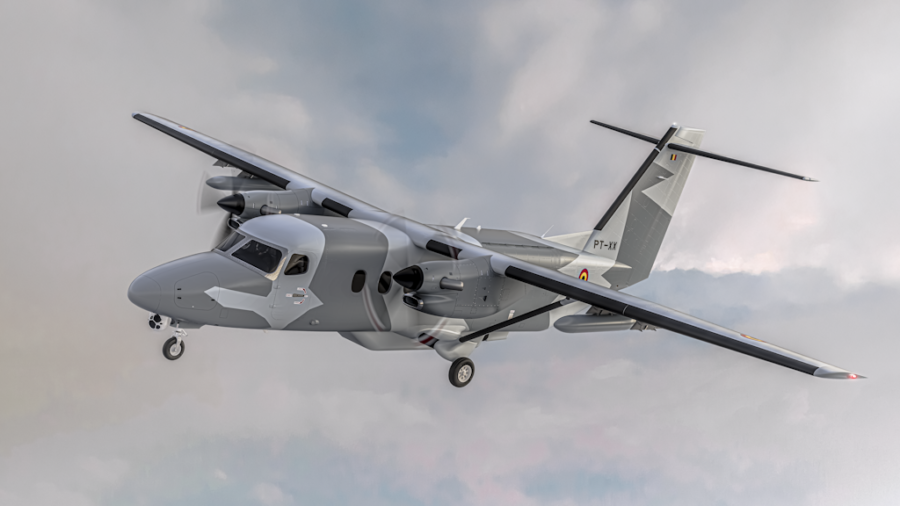
For Croatia, such a category would be more realistic than large transport aircraft. The SkyCourier would not be a replacement for the C-130, C-390 or A400M, but it could serve as an everyday utility aircraft for tasks that today require improvisation, reliance on allies or commercial transport. In the same broader category, the Pilatus PC-12, DHC-6 Twin Otter, Dornier 228 or L-410NG could also be considered, depending on whether Croatia would primarily seek transport, short-runway capability, a medical configuration, island connectivity, special missions or a combination of all of these.
The medium class opens a different discussion. The Airbus C295 is not a large strategic airlifter, but a robust tactical transport platform designed to carry personnel, cargo and equipment, operate from shorter and less prepared runways, and perform a range of military and civilian missions. For Croatia, such an aircraft would make sense only if viewed more broadly, as a state aircraft for the needs of the Armed Forces, civil protection, equipment transport, medical evacuation, humanitarian missions and support for operations at home and abroad. If assessed solely through occasional transport requirements, its cost-effectiveness would remain open to question. But if viewed as a multipurpose platform that fills the gap between helicopters and the large transport aircraft of allied nations, the discussion becomes more serious.
Above that are the Embraer C-390 Millennium and Airbus A400M. The C-390 would give Croatia a genuine tactical transport capability, with capacity useful in the NATO and EU context, for international missions, evacuations, equipment transport and regional support. But that would already be a very serious financial, personnel and infrastructure project. The A400M, on the other hand, would almost certainly be too large for Croatia as an independent national platform. It could only be imagined in a multinational arrangement, a joint squadron or a European capacity-sharing model. Otherwise, it would be an example of ambition exceeding real needs and possibilities.
Aircraft for surveillance, SAR and border protection
A separate chapter should be dedicated to aircraft for surveillance, search and rescue and support to state services. Croatia has a long coastline, a large maritime area of responsibility, an external border of the European Union, developed maritime traffic, tourism, fisheries, migration challenges and increasingly pronounced climate risks. All of this creates a need for better aerial surveillance, but here too, caution is required. Croatia does not need an expensive and large platform if there is no constant operational workload, crews, budget and clearly defined inter-agency use for it.
That is why a more reasonable first step could be a smaller multirole aircraft such as the Diamond DA62 MPP. Such a platform is not designed as a large military patrol aircraft, but as an economical sensor carrier for coastal, border, maritime and traffic surveillance, fire monitoring, environmental incidents and searches for missing persons. In the Croatian context, this could be particularly useful because the same system could be used by the Croatian Air Force, coast guard, police, civil protection and search and rescue services.
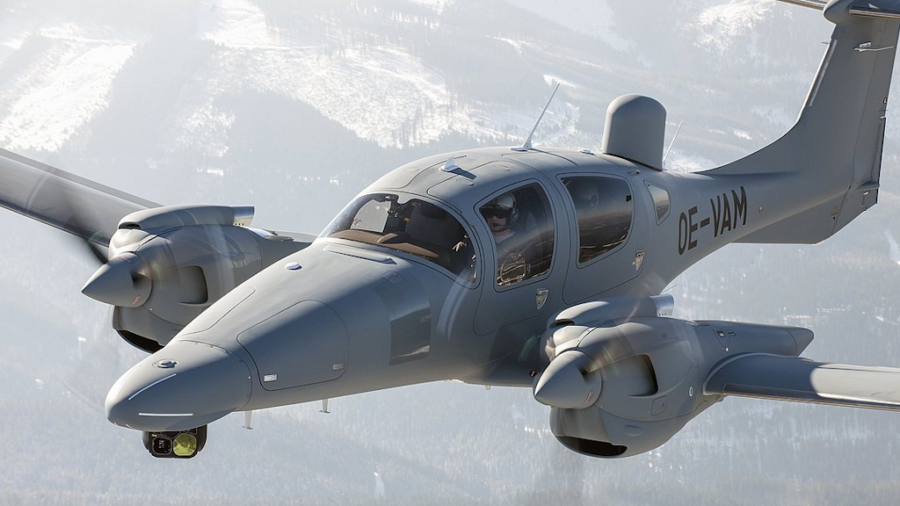
The DA62 MPP is interesting precisely because it can be equipped according to real needs, from electro-optical and infrared cameras to communications and mission systems. Such an aircraft would not be a prestige platform, but a rational first step. Above it, in the long term, a medium platform such as the ATR 72MP could be considered, but only if Croatia proved that it needed a permanent, seriously equipped aircraft for surveillance of the Adriatic and the EU’s external border. The most realistic path is probably not a jump to large patrol aircraft, but a combination of smaller special-mission aircraft, unmanned systems, helicopters, coastal radars and maritime capabilities.
Training, from the Zlin to the Rafale
If the Rafale is the top of the pyramid, then training is its foundation. Croatia today has a training system based on the Zlin 242L in the initial and selection phase, the Pilatus PC-9M in more advanced training and the Bell 206B in helicopter training. In 2019, the Ministry of Defence announced that selection flying for Croatian military pilots was conducted on Zlin 242L aircraft, with each candidate completing 10 flight hours. The same year, it was also announced that young military pilots flew the Zlin 242L, Pilatus PC-9M and Bell 206B during their training.
The Zlins have been in Croatian Air Force service since 2007. After the 2020 accident, the Ministry of Defence stated that the Zlin 242L had been part of the Croatian Air Force since 2007, while assessing at the time that it was a safe and reliable aircraft. This is important to emphasize because the issue of replacement should not be framed sensationally. The point is not to say that the Zlins must be replaced immediately because they are old. The point is that every training fleet must be planned in advance, especially when above it stands an expensive and demanding combat system such as the Rafale.
In due course, Croatia will have to consider replacing its entry-level aircraft for selection flying and initial training. Such a platform does not have to be expensive, nor does it need military ambitions beyond its role. In that category, aircraft such as the Diamond DA40 NG, Tecnam P-Mentor, Elixir, Grob G 120TP or similar types could be considered. The Diamond DA40 NG is interesting because of its jet fuel engine, modern avionics and the fact that it is already used by some military and state schools, for example Austria, which ordered four DA40 NG aircraft for its armed forces in 2018.
The Tecnam P-Mentor represents an economical and modern training platform for basic training, with Garmin G3X avionics and an emphasis on low operating costs. Portugal selected the P-Mentor in 2026 for its new military pilot training programme, showing that simpler piston aircraft can also have a place in modern military training.
Elixir is another interesting European candidate, especially for a civil-military training model, as it is promoted as a modern CS-23-certified training aircraft with an emphasis on simple maintenance and lower costs. For Croatia, such aircraft would make sense if the aim were to keep selection flying simple, safe and inexpensive, without unnecessarily burdening the system.
The Grob G 120TP already enters a more ambitious category. It is a turboprop training aircraft powered by a Rolls-Royce M250-B17F engine, with up to 456 shp in a five-minute regime and a configuration adapted for military training. Grob offers it as a platform for basic and more advanced training, so for Croatia it could be interesting only if the goal were to skip part of the step between a simple selection aircraft and a PC-9 replacement. But that would probably be a more expensive and ambitious solution than what is needed for selection alone.
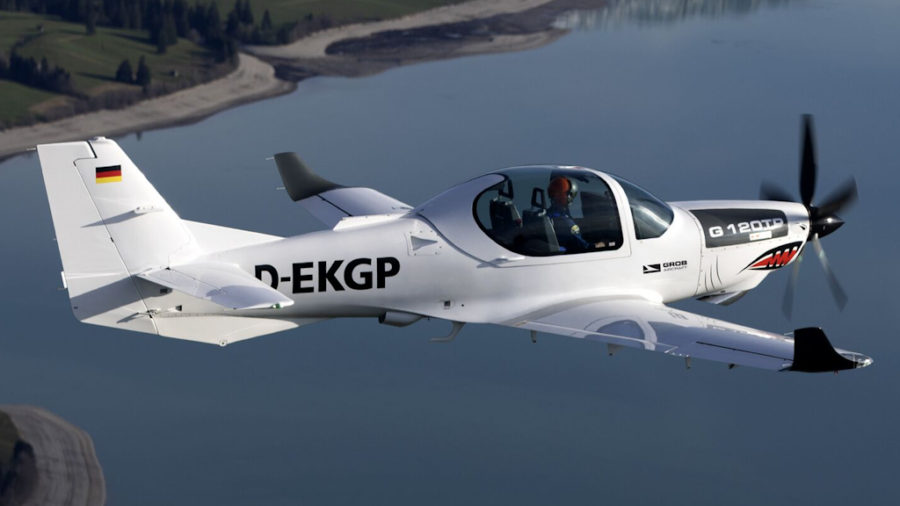
The most reasonable approach would be to separate two things: an aircraft for selection and initial flying must be simple, reliable and inexpensive per flight hour, while the aircraft replacing the PC-9 must have more serious performance, the ability to support aerobatic and advanced training, modern avionics and a good transition toward higher levels of training. If those two roles are merged into a single type, there is a risk that an aircraft too expensive for simple selection will be used, or that a platform not capable enough for advanced training will be purchased.
A replacement for the PC-9 and an advanced trainer before the Rafale
The PC-9M has for years been one of the most important aircraft of the Croatian Air Force. Advanced training, the Wings of Storm aerobatic team and much of the identity of Croatian military aviation were built around it. But that fleet too is entering a phase in which a successor must be considered. Several possible directions open up here.
The Diamond DART-750 could be an interesting European candidate, especially if a new-generation turboprop trainer with modern avionics, relatively economical maintenance and aerobatic training capability is sought. The Pilatus PC-7 MKX would be a logical continuation of the Pilatus philosophy, with a modern cockpit and a more conservative approach. The Beechcraft T-6C Texan II offers a proven platform, a powerful engine and a large user base, but also an American logistical and pricing framework. In this category, Croatia should not look for the most attractive aircraft on paper, but for the one that best matches the number of pilots, flight hours, instructor cadre and later transition toward the Rafale.
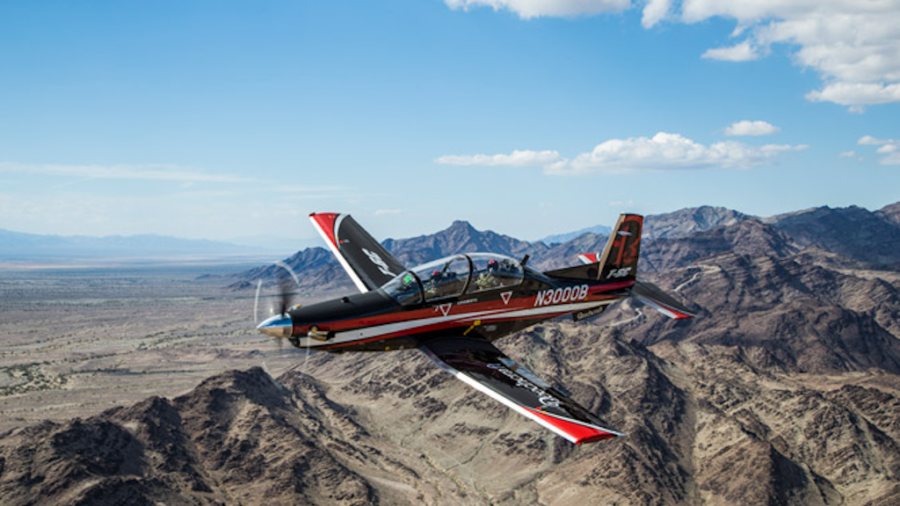
Above that, the question of an advanced trainer before the Rafale arises. The Pilatus PC-21 could be the most realistic option if Croatia wants a highly developed turboprop which, through simulation, avionics and performance, can take over part of the tasks once performed on jet trainers. The PC-21 is not a small Rafale, but it can reduce the number of expensive hours on the fighter aircraft and enable a better transition toward the fighter squadron.
Light jet trainers, useful capability or an expensive parallel fleet
With jet trainers, the story is even more complex. With the Rafale, Croatia has a highly advanced fighter aircraft, but it does not have a domestic jet bridge between turboprop training and the fighter squadron. That does not automatically mean the Croatian Air Force must buy a jet trainer. Part of advanced training can be conducted through international programmes, simulators and cooperation with allies. But if greater long-term independence in pilot training were considered, a light jet trainer could make sense.
The simplest and probably most rational candidate in that category would be the Czech Aero L-39 Skyfox, previously known as the L-39NG. It is a subsonic jet trainer and tactical aircraft that does not try to be a replacement for a combat aircraft, but rather a training and light tactical platform. In the Croatian context, the L-39 would be a “training jet plus”, useful for advanced training, limited reconnaissance, air patrolling and maintaining jet pilot skills, but without creating a second combat fleet.
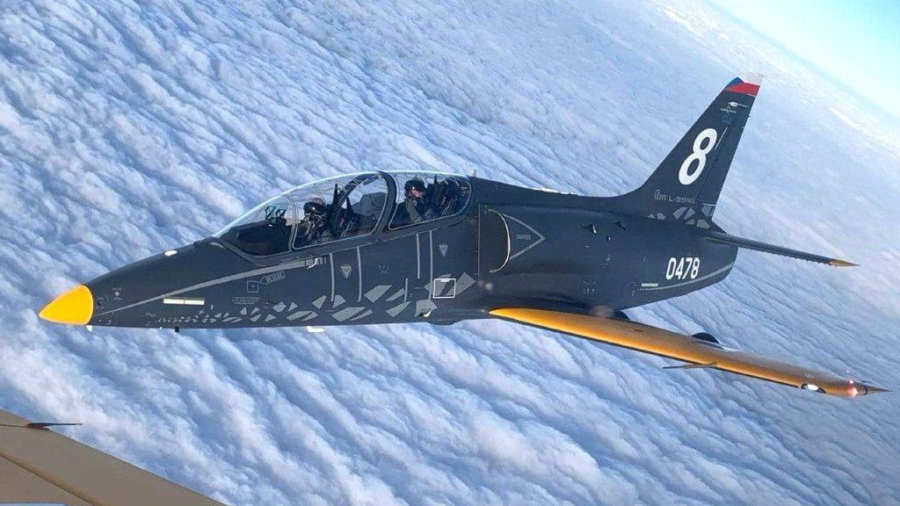
A step above would be the Leonardo M-346, an aircraft already proven in several air forces as an advanced jet trainer and part of a broader training system. Its greatest advantage is not only the aircraft itself, but the complete training system, including simulators, ground school and transition toward modern combat aircraft. For Croatia, the M-346 would be technically very interesting, but financially and organizationally a serious undertaking. An even more sensitive issue would be the M-346FA, the combat-capable version with radar and weapons, because Croatia would very quickly open the question of a second combat fleet, which is difficult to justify alongside the Rafale.
The Korean KAI T-50 and its combat derivative FA-50 further broaden the discussion. The T-50 is a supersonic advanced trainer, while the FA-50 already enters the category of a light combat aircraft. On paper, it is an attractive platform because it can serve for training, lower-intensity air policing, tactical support and limited combat missions. But that is precisely the problem. For Croatia, the FA-50 could very easily cease to be merely a trainer and become a second combat fleet, with its own maintenance, weapons, infrastructure and crews. After the purchase of the Rafale, this would have to be justified very carefully.
There is also the Turkish Hürjet, a new supersonic trainer and light combat aircraft being developed for the Turkish Air Force and export customers. The programme is interesting because it shows where the advanced trainer market is heading, but for Croatia, at this stage, it would probably be too risky as a first choice. The reason is not only procurement policy, but programme maturity, logistics and the fact that the Croatian Air Force needs stable, proven and long-term sustainable platforms.
If Croatia ever opens the question of a jet trainer, it must first answer several unattractive but crucial questions: how many hours on the Rafale can be saved, how many pilots are trained annually, whether there is a possibility of a regional training centre, whether part of the capacity could be offered to allies and whether the Croatian Air Force has enough instructors, technicians and budget for another fleet. Only after that comes the choice of type. The L-39 would be the most modest and rational option, the M-346 the most comprehensive advanced training system, the T-50 and FA-50 the most ambitious and closest to a light combat component, while the Hürjet is an interesting but still relatively new option.
Helicopters, the Black Hawk as the backbone and the need for a lighter platform
The helicopter component has a clearer development direction. The Black Hawk should become the backbone of the Croatian Air Force’s medium transport fleet. That is a logical choice because Croatia must replace Russian platforms, align itself with NATO logistics and have a helicopter that can serve the military, special forces, civil protection and citizens in crisis situations. With 12 UH-60Ms, Croatia will have a serious capacity, especially for a country of its size.
But the Black Hawk is not the answer to everything. It is not rational to use a medium tactical helicopter for every training, liaison, light transport, patrol or surveillance task. That is why, in the long term, it would make sense to consider a lighter twin-engine platform, such as the H145M, Bell 429M or a similar type. Such a helicopter could take over some tasks that do not require the Black Hawk, while also serving for training, support to the police, civil protection, SAR and lower-intensity special tasks.
The AW139M would be a stronger medium option, but in the Croatian context it could raise the issue of overlap with the Black Hawk. Therefore, the best development of the helicopter fleet would probably be layered: the UH-60M for medium tactical transport, medical evacuation, search and rescue and support to special forces, and a smaller twin-engine helicopter for lighter and everyday tasks. This would save Black Hawk resources and give the Croatian Air Force a more flexible system.
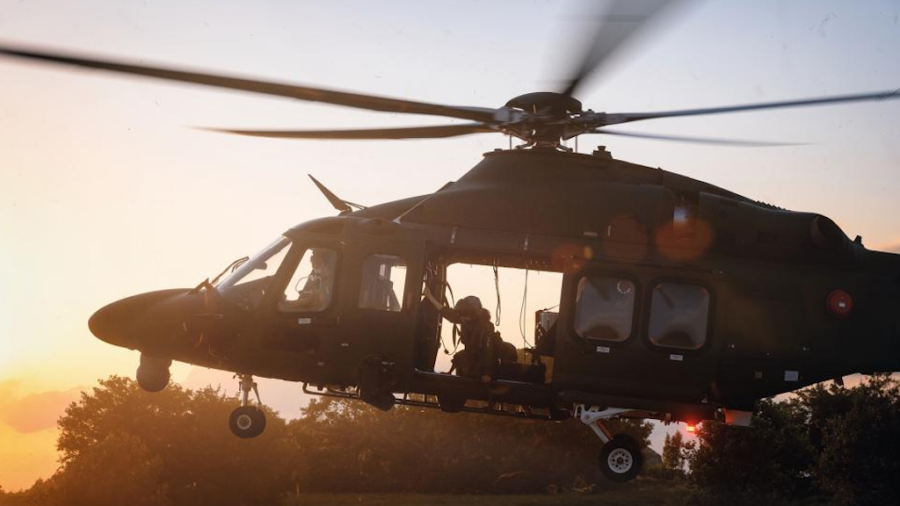
The Kiowa Warrior deserves a special place in this picture. The OH-58D Kiowa Warrior gives the Croatian Air Force a capability that can be replaced neither by a transport helicopter nor by a fighter aircraft. It is a light reconnaissance and attack helicopter that is especially valuable precisely because it can operate where the use of larger and more expensive platforms would be unnecessary or irrational. In Croatian conditions, the Kiowa is a useful tool for reconnaissance, surveillance, support to ground forces, fire direction, protection and escort, as well as lower-intensity operations in which reaction speed, visibility and flexibility are more important than raw power.
That is why the Kiowas should not be viewed as a secondary or transitional capability, but as a valuable part of a layered Croatian Air Force that should be maintained and used for at least the next decade, and possibly longer if their technical condition and support allow it. In combination with the Black Hawk, unmanned systems, ground forces and future surveillance platforms, the Kiowa can remain an important link between helicopter mobility, reconnaissance and light fire support. Such capabilities show very well that a serious air force is not built only around the largest and most expensive platforms, but also around those that provide everyday operational value in real missions.
Firefighting component, a calmer picture for the next decade
One of the most important and visible contributions of the Croatian Air Force to society is its firefighting component. The Canadairs and Air Tractors are not merely military aircraft each year, but a system that saves lives, property and nature. In a country with a long coastline, islands, demanding summer seasons and increasingly pronounced climate risks, that capability has strategic value.
In this segment, Croatia is in a relatively calmer position, at least for the next decade. In March 2024, the Croatian Government announced the signing of a contract worth 105 million euros for the purchase of two new DHC-515 aircraft, fully financed by European funds. Prime Minister Andrej Plenković stated at the time that the number of firefighting aircraft would increase from six to eight, with five in continuous use, one serving for spare parts, and the new aircraft expected to bring Croatia to seven functional Canadairs.
The Canadian Commercial Corporation also announced that the contract with Croatia includes two DHC-515 aircraft, spare parts, training and maintenance support. This is important because Croatia is not buying only an aircraft, but a package intended to ensure the long-term usability of the fleet.
The firefighting fleet is therefore not an area in which Croatia must immediately seek another major modernization. On the contrary, the key is to maintain existing capabilities, ensure a sufficient number of crews and technicians, plan maintenance, integrate the new DHC-515s and continue cooperation within the European rescEU system. At a time when fire seasons are likely to become longer and more demanding, the stability of the firefighting component is one of the Croatian Air Force’s greatest assets.
State aircraft and the question of organization
A separate issue is the state aircraft. The Croatian Challenger CL-604 has served the state leadership for a long time, but objectively it is entering an age in which maintenance, parts availability, reliability and the cost-effectiveness of continued operation are becoming increasingly important topics. In many countries, state aircraft are part of the air force or military aviation units, which does not mean Croatia must copy that model, but does mean it should seriously consider it.
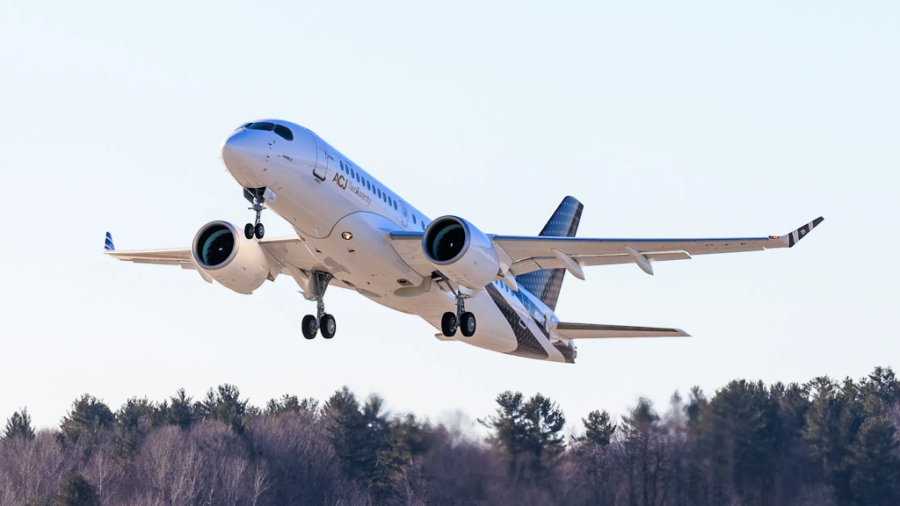
If a replacement is sought one day, there are several possible directions. A used A319 could be a realistic option because of platform availability, capacity and potential links to maintenance within the Croatian aviation environment. The ACJ TwoTwenty, based on the A220, would be modern and attractive in the long term, especially as Croatia Airlines is introducing the A220 into its fleet, but as a new aircraft it would be significantly more expensive. If such an option were ever considered, it would also raise the possibility of a civilian company, Croatia Airlines, hypothetically maintaining military aircraft. It is not impossible, but it would certainly be unusual. Smaller business jets, such as the Falcon, Gulfstream, Global or a newer Challenger, would probably be the most direct replacement in terms of mission profile.
In one broader hypothetical idea, Pilatus could be interesting if the consolidation of training and state platforms were considered, for example the PC-21 or PC-7 MKX for training and the PC-24 for state transport. But the PC-24 is realistically smaller and weaker than the Challenger in terms of range and delegation capacity, so it would be a solution for short and medium missions, not a full replacement for everything the CL-604 covers today.
Ambition, yes, but with balance
The Croatian Air Force deserves praise because in just a few years it has made a generational leap that had been postponed for decades. The Rafale, Black Hawk, modernization of air defence, unmanned systems and a stable firefighting component are changing the real picture of Croatian defence. The Croatian Air Force is no longer an air arm trying to survive, but a system rebuilding its capabilities.
But the next phase will be harder than the purchase of the Rafale itself. Croatia objectively lacks a transport aircraft, must consider replacing the Zlin for selection flying, a successor to the PC-9, a possible advanced trainer before the Rafale, a lighter helicopter platform, aircraft for surveillance and SAR, and the future of the state aircraft. All these are legitimate topics, but none of them should become a wish list.
Military aviation is extremely expensive. Every new type brings training, instructors, technicians, spare parts, infrastructure, simulators, fuel, documentation, maintenance contracts and long-term budget obligations. That is why the best development path for the Croatian Air Force is not the one that lists the most attractive aircraft, but the one that combines ambition with balance. Croatia needs capabilities it can pay for, maintain, staff and actually use.
The Rafale is the top of the pyramid. Now its foundation must be built. That is less spectacular than major announcements, but it is precisely there that the difference between wishful thinking and a serious air force becomes visible.
Finally, it is worth saying something that is often forgotten when discussing air forces. Military aviation is a much broader concept than fighter aircraft, helicopters, trainers, transport and firefighting components, which are the areas Croatia can realistically discuss. Large air forces include strategic and tactical transport aircraft for parachute and airborne operations, aerial refuelling aircraft, airborne early warning and command platforms, specialized electronic warfare aircraft, long-range anti-submarine and maritime patrol aircraft, strategic bombers, fifth-generation stealth aircraft, specialized platforms for reconnaissance, surveillance and the collection of electronic intelligence, combat search and rescue aircraft, long-range combat unmanned systems, aircraft for special operations and even naval variants of fighter aircraft designed to operate from aircraft carriers. All of these are real and important capabilities of a modern air force, but in the Croatian context it is illusory to discuss them as national components. Not only because such projects would far exceed the financial capabilities of the state, but above all because Croatia, given its size, position within NATO, geostrategic environment, political goals and real defence needs, simply does not require such capabilities. A serious air force is not built by a small country trying to copy great powers, but by clearly understanding what it needs, what it can sustain and in which segment it contributes most to its own security and the collective defence of the Alliance.


